
Senior Pet Brain Games: Gentle Enrichment for Dogs & Cats
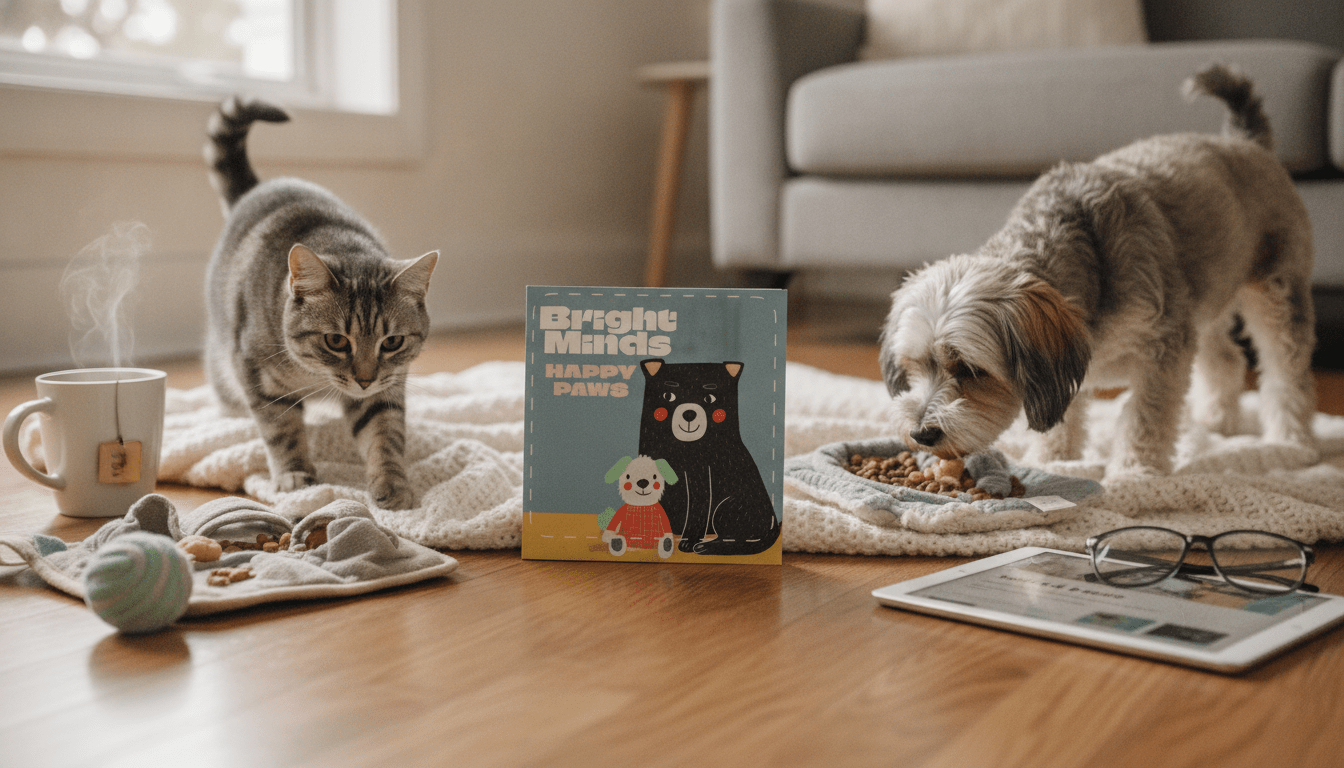
Bright Minds, Happy Paws: Simple Ways to Keep Senior Dogs and Cats Mentally Sharp
Mental enrichment is one of the kindest gifts for an aging pet. Small, consistent activities can support confidence, reduce restlessness, and keep daily life engaging—without requiring intense exercise. The goal isn’t to “train hard,” but to offer tiny, doable challenges that fit common senior changes like slower mobility, shifting senses, and shorter attention spans. For more guidance, see Old Dog, New Tricks! Brain Games through Enrichment and Training. Incorporating Senior Pet Brain Games into your routine can greatly enhance their mental stimulation.
Engaging in Senior Pet Brain Games can provide mental challenges that keep your pets stimulated and happy.
What “mental sharpness” looks like in senior pets
Mental sharpness in older dogs and cats often looks simple on the surface: a little curiosity, a little problem-solving, and a little emotional steadiness throughout the day. For further reading, see The Ultimate Guide to Brain Games for Aging Dogs – CocoTherapy.
Engaging your pet with Senior Pet Brain Games can also significantly improve their quality of life and emotional well-being.
- Curiosity and engagement: sniffing, exploring, seeking interaction, and responding to familiar cues.
- Healthy problem-solving: working for food, choosing between options, or learning an easy new pattern.
- Emotional steadiness: fewer stress behaviors when left alone, calmer transitions, and easier settling.
Aging is normal, but sudden or steep behavior changes deserve a veterinary check to rule out pain, sensory loss, or cognitive dysfunction. For deeper reading on age-related changes, see the AAHA Senior Care Guidelines for Dogs and Cats and Cornell’s overview of Cognitive Dysfunction Syndrome.
Set up enrichment that matches an older body
Remember that Senior Pet Brain Games should be tailored to your pet’s individual needs, ensuring they remain engaged and stimulated.
The best enrichment for seniors is “easy to start, easy to win.” That keeps your pet participating instead of opting out.
- Make success easy: start with low-frustration puzzles and increase difficulty gradually.
- Support comfort: use non-slip mats, keep soft bedding nearby, and set puzzles on stable surfaces.
- Work with sensory changes: use stronger-smelling treats for reduced smell; choose larger items for reduced vision.
- Keep sessions short: 3–8 minutes is often better than a long session that causes fatigue.
- Use a consistent “game cue”: same place and phrase helps your pet anticipate and relax into the activity.
For outdoor enrichment that’s controlled and comfortable, a soft, easy-grip leash can make slow sniff sessions feel secure. Consider the Handmade Cotton Pet Leash for relaxed, steady “sniff walks” where your pet sets the pace.
Brain games that build focus without overexertion
Think of these as low-impact “puzzles for the senses.” If your pet pauses, looks away, or walks off, the game is likely too hard—or simply too long.
- Sniff-and-find: hide 3–8 treats under cups or in a snuffle mat; increase locations as confidence grows.
- Scatter feeding: toss kibble across a rug (or a safe patch of yard) for a slower, more satisfying meal.
- Name the toy: ask for a specific toy by name; reward any attempt, then gradually shape accuracy.
- Gentle shaping with a target: teach a nose-touch to your hand (or a target stick), then add simple sequences (touch, step on mat, look at you).
- Puzzle rotation: cycle 2–4 easy puzzles to prevent frustration; retire any puzzle that leads to repeated quitting.
Keep rewards small and frequent. For many seniors, the “win” is the rhythm of success: cue, solve, reward, rest.
Enrichment ideas for common senior challenges
Incorporating different types of Senior Pet Brain Games can enhance their learning experience and keep them mentally fit.
Older pets aren’t one-size-fits-all. Match the game to the body and the day.
During longer, slower walks, hydration breaks can help seniors recover comfortably—especially in warm or dry weather. A lightweight option like the Collapsible Portable Pet Bowl makes it easy to offer small sips without cutting the walk short.
Engagement through Senior Pet Brain Games can improve your pet’s mood and reduce feelings of anxiety.
If your pet’s behavior changes are escalating (confusion, new anxiety, altered sleep), it may help to review common patterns of aging with a veterinarian and reputable references such as the Merck Veterinary Manual: Behavior Problems of Aging Dogs.
A simple 7-day mental enrichment routine
7-day gentle brain & body plan (mix and match)
| Day | Brain game (5–8 min) | Body activity (10–20 min) | Easy win to end on |
|---|---|---|---|
| Day 1 | Sniff-and-find under 3 cups | Slow “sniff walk” with plenty of stops | One treat placed in the open |
| Day 2 | Hand target (nose-touch) + 3 reps | Light stretching/physio moves approved by vet | Touch = treat immediately |
| Day 3 | Scatter feeding in one room | Indoor obstacle “lane” (step over towel, around chair) | Kibble tossed nearby |
| Day 4 | Puzzle feeder on easiest setting | Short leash walk focused on sniffing | A simple sit or look cue |
| Day 5 | Find the toy (1 toy, close distance) | Stroll + gentle stairs only if comfortable | Toy presented directly to nose |
| Day 6 | Lick mat or frozen topper (supervised) | Calm backyard exploration | Calm settle on a mat |
| Day 7 | Scent trail (treat every 2–3 steps) | Play-based movement (soft tug or roll ball) | Treat in hand after one step |
Longevity-friendly habits that reinforce brain health
A ready-to-use plan for ongoing games and routines
For a step-by-step option that covers both dogs and cats with low-impact games and practical home setups, see Bright Minds, Happy Paws: Keeping Your Senior Pet Mentally Sharp (digital guide).
FAQ
How many minutes of mental enrichment does a senior pet need each day?
Many senior pets do well with about 10–20 total minutes per day, split into 2–4 mini-sessions. Adjust down on low-energy days, and prioritize easy wins over longer, tiring sessions.
What are easy brain games for senior dogs with arthritis?
Choose stationary sniff work (snuffle mats, treat searches), lick mats, scatter feeding, and very easy puzzle feeders on non-slip surfaces. Avoid jumping and tight turns, keep sessions brief, and end on a simple success.
When should a veterinarian check behavior changes?
Schedule a check if changes are sudden or steep—such as new disorientation, house-soiling, anxiety or aggression, major sleep shifts, appetite changes, or signs of pain. Cognitive dysfunction and sensory loss can look like “just aging,” but they’re best assessed early.
Recommended for you


Finally, consult with your veterinarian about suitable Senior Pet Brain Games that match your pet’s health condition.








Leave a comment