
Calm Pet Socialization: A Checklist for Stress-Free Meets
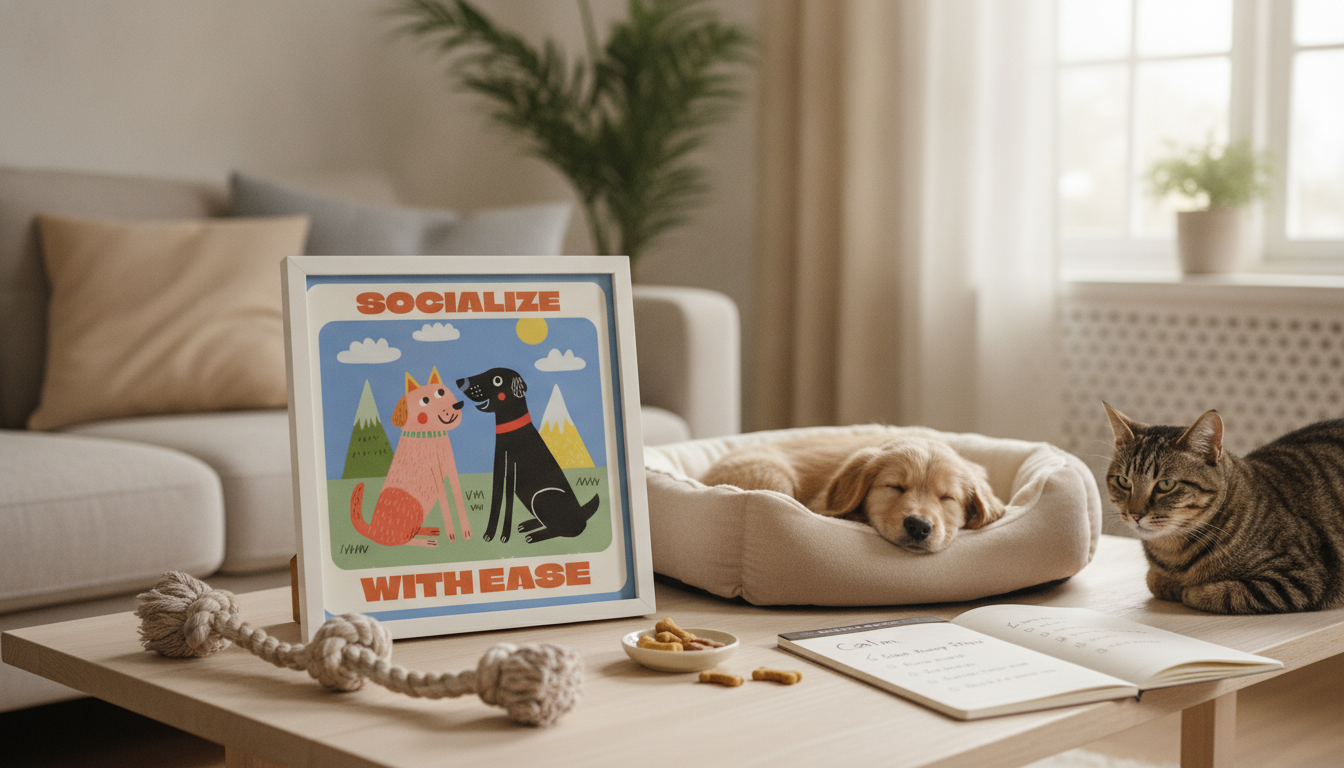
Calm socialization is built on small wins: setting up the environment, reading body language early, and ending interactions before stress builds. With a simple checklist mindset, social moments become predictable and safer—so pets can learn that new people, pets, sounds, and places aren’t a trap, and that they always have an exit plan. For more guidance, see Socializing your dog – Animal Humane Society.
What “calm socialization” looks like
- Comfort over contact: curiosity and relaxed body language matter more than getting close.
- Choice-based introductions: the pet decides distance and pace.
- Short sessions with breaks: stop while the pet is still doing well.
- Predictable routines: repeat the same setup to reduce uncertainty.
- Skill-building mindset: focus on confidence, not “perfect behavior.”
When socialization is calm, you’ll see more “look, then relax” moments: the pet notices something new, checks in with you, and returns to sniffing, eating, or resting. That’s the outcome to aim for—not prolonged greetings or forced proximity. For further reading, see Training Tips: Calm Behavior at Home | San Diego Humane Society.
Before you start: set up the environment for success
- Create a calm zone: bed/crate/mat in a quiet corner, plus water and a chew or lick item.
- Remove pressure: block off crowded hallways, reduce noise, avoid tight spaces where a pet can feel trapped.
- Use the right gear: comfortable harness or well-fitted collar; a longer leash for dogs when space allows.
- Plan an exit route: a simple way to step away without pulling or chasing the pet.
- Choose high-value rewards: tiny, soft treats or a favorite toy—used only for social practice sessions.
Quick setup checklist
| Item | Goal | Notes |
|---|---|---|
| Calm resting spot (bed/mat) | Gives a safe default location | Place away from doorways and traffic |
| Treat pouch + small treats | Reinforces calm choices quickly | Use pea-sized pieces |
| Barrier (baby gate/pen) | Creates distance without restraint | Helpful for multi-pet homes |
| Low-noise enrichment (lick/chew) | Lowers arousal and helps settling | Offer after the hardest moment |
| Transport plan (carrier/seatbelt) | Reduces stress before arrivals | Practice in calm times first |
For many pets, the calm zone is the real “training tool.” If a pet can retreat to a familiar spot and predict what happens next, you’re already reducing the intensity of the social situation.
Read the early signals: calm, unsure, and overwhelmed
- Calm/ready signs: loose body, soft eyes, normal breathing, interest in food, choosing to approach and retreat.
- Uncertain signs: freezing briefly, lip-licking, looking away, slow movement, paw lift, tucked posture, ears back.
- Overwhelmed signs: stiff body, hard stare, lunging, growling/hissing, frantic pulling, hiding and refusing food.
- Rule of thumb: if eating stops or the body stiffens, add distance and reduce the challenge.
- Reward the small things: looking away, sniffing the ground, turning back to the handler, choosing the mat.
If you’re new to interpreting stress signals, authoritative overviews can help you build a clearer baseline. The AVMA’s guidance on socialization for dogs and cats is a solid starting point: https://www.avma.org/resources-tools/pet-owners/petcare/socialization-dogs-and-cats.
The calm socialization checklist (people, pets, places)
Calm socialization mini-plan by situation
| Situation | Before | During | After |
|---|---|---|---|
| New visitor at home | Pet behind gate or on mat; visitor ignores pet | Treat for calm looks; optional sniff when pet initiates | Quiet enrichment in calm zone; note what distance worked |
| Dog meets dog outdoors | Parallel walk with wide space | Reward check-ins; allow brief sniff only if both are loose | Walk away and decompress; avoid repeating if either stiffened |
| Cat meets new room/sounds | Set up safe room + hiding options | Open door gradually; treat for exploration | Return to safe room; keep sessions short |
| Busy sidewalk/park | Pick low-traffic time; start at edge | Reward calm observation; increase distance if arousal rises | Sniff walk or settle time at home |
When in doubt, choose distance and movement over “standing still and enduring.” For dogs especially, gentle parallel motion often lowers pressure compared to face-to-face greetings (see general training guidance from the ASPCA: https://www.aspca.org/pet-care/dog-care/dog-behavior-training).
Common mistakes that increase stress (and simple swaps)
A simple 7-day calm socialization routine
Digital checklist guide: an easy way to stay consistent
If you like having the steps in front of you during real-life moments, Socialize with Ease: A Calm Pet Checklist (digital download) is designed for quick use before and during introductions—covering setup, body language, and pacing so you can stay calm when your pet is unsure.
To support decompression and settling, pair social practice with a predictable “safe default.” A designated resting spot like the Cozy Pet Bed for Cats and Small Dogs can help make calm breaks feel the same every time. For cats (and some dogs) who unwind through focused play and food-motivated enrichment, the Cat Swing Feeder Toy can be a helpful post-session reset activity.
FAQ
How long should a socialization session last?
Aim for short, successful sessions—often 30–90 seconds per exposure with breaks—ending while your pet is still relaxed and taking treats.
What if my pet won’t take treats around new people or pets?
That usually signals stress over threshold. Increase distance, reduce intensity, switch to higher-value rewards, and prioritize decompression; consider working with a qualified professional if it continues.
Is it okay to let dogs “work it out” during greetings?
Avoid forcing interactions. Use parallel movement and allow optional brief sniffing only when both dogs stay loose, then interrupt early if stiffness, staring, or tension appears.










Leave a comment