
Cat First-Aid Kit Checklist: Essentials & Safe Steps
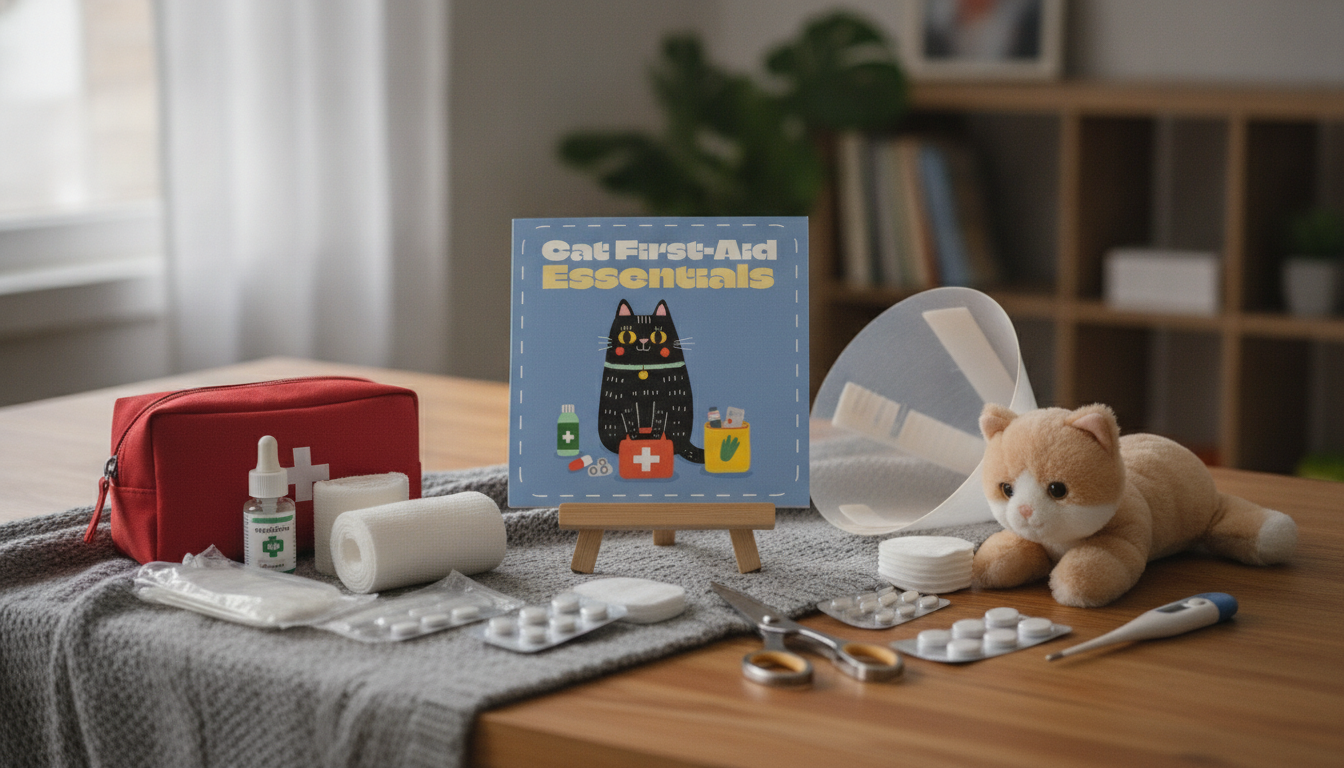
Cat First-Aid Essentials: What to Keep on Hand and How to Use It Safely
Emergencies with cats often move fast—scratches that won’t stop bleeding, sudden vomiting, breathing trouble, or a suspected toxin exposure. A well-prepared first-aid kit (plus a simple plan) helps stabilize a cat until veterinary care is available. The goal is not to replace a veterinarian, but to prevent worsening injury, reduce stress, and support safer transport to the clinic.
Having a Cat First-Aid Kit is essential for any cat owner to ensure they are prepared for emergencies.
Cat First-Aid Kit: what it can (and can’t) do
A cat first-aid kit is about buying time and reducing risk on the way to professional care. The most helpful actions are usually the simplest: keep your cat calm, prevent further injury, and contact a veterinarian as early as possible.
- Focus on stabilization: control bleeding, protect wounds, prevent shock, and keep the airway clear while arranging veterinary help.
- Avoid human medications: many common over-the-counter drugs (including pain relievers and cold medicines) can be toxic to cats unless a veterinarian specifically instructs their use.
- Know the “go now” signs: open-mouth breathing, seizures, suspected poisoning, collapse, uncontrolled bleeding, a bloated abdomen, or inability to urinate require urgent veterinary care.
For general pet emergency guidance and what to do while you’re on the way to care, see the AVMA’s first-aid tips: https://www.avma.org/resources/pet-owners/emergencycare/first-aid-tips.
Must-have items for a cat first-aid kit
A good kit balances wound care, safe handling, and basic assessment tools—without adding risky medications. Choose items that are easy to use under stress, and that won’t shed lint or stick to wounds.
Core supplies
- Wound care basics: sterile gauze pads, non-stick pads, medical tape, self-adherent wrap (vet wrap), sterile saline wound wash, and blunt-tip scissors.
- Protection and restraint: disposable gloves, a soft towel or small blanket, and a carrier-ready plan to prevent bites/scratches when a cat is in pain.
- Tools for assessment: digital thermometer (with lubricant), tweezers, a small flashlight, and a notebook card with baseline info (normal appetite, meds, conditions).
- Bleeding control: gauze rolls and hemostatic options as advised by a veterinarian; apply firm pressure and seek urgent care for heavy bleeding.
- Comfort and temperature support: instant cold pack, a microwavable heat pack (used carefully to avoid burns), and an emergency space blanket.
- Cleanup and safety: antiseptic wipes for hands/surfaces (not for deep wounds), waste bags, and a spare leash/harness for transport.
Quick checklist: build a cat first-aid kit
| Category | Item | Why it matters |
|---|---|---|
| Bandaging | Sterile gauze pads + non-stick pads | Covers wounds and reduces contamination |
| Bandaging | Self-adherent wrap + medical tape | Secures dressings without slipping |
| Cleansing | Sterile saline/wound wash | Flushes debris gently without harsh chemicals |
| Tools | Blunt-tip scissors + tweezers | Cuts tape/wrap; removes superficial debris or ticks |
| Assessment | Digital thermometer + lubricant | Checks fever/hypothermia when instructed |
| Cold/Heat | Cold pack + heat pack | Helps with swelling; supports warmth for shock risk |
| Handling | Towel/blanket + gloves | Reduces stress; protects handler from bites/scratches |
| Admin | Emergency contacts card | Saves time during urgent decisions |
Helpful add-ons (that keep things simple)
If you want a structured, print-ready way to organize supplies and steps, a compact reference can reduce second-guessing during stressful moments. The Cat First-Aid Essentials | Digital Guide for Cat Owners | Must-Have Items for a Cat First-Aid Kit | Printable eBook for Pet Safety is designed to be easy to keep by the kit and share with family or pet sitters.
For comfort during recovery or after a stressful vet visit, a warm, quiet resting spot can help your cat settle. Consider keeping a dedicated “calm zone” ready with a clean towel or a supportive bed like the Cozy Pet Bed for Cats and Small Dogs.
Emergency contacts and information to keep with the kit
A kit is only as useful as your ability to act quickly. Keep a paper card in the kit (and a photo of it on your phone) with:
- Phone numbers: your primary veterinarian, the nearest 24/7 emergency clinic, and animal poison control.
- Cat’s health details: age, weight, microchip number, allergies, chronic conditions, and current medications with doses.
- Transport plan: carrier location, a spare towel inside, and a pre-identified route to the emergency clinic.
For potential toxin exposures, save the ASPCA Animal Poison Control resource and call immediately if you suspect ingestion: https://www.aspca.org/pet-care/animal-poison-control.
Common scenarios and the safest first steps
Bleeding or torn nail
Suspected poisoning
Breathing distress
Heat stress
Minor cuts and scrapes
For more cat health guidance and prevention resources, the Cornell Feline Health Center is a useful reference: https://www.vet.cornell.edu/departments-centers-and-institutes/cornell-feline-health-center.
Cat first-aid kit storage, maintenance, and print-and-go readiness
When multiple people care for your cat, a shared “same steps every time” approach can prevent mistakes. A printable checklist-style resource like the Cat First-Aid Essentials | Digital Guide for Cat Owners | Must-Have Items for a Cat First-Aid Kit | Printable eBook for Pet Safety can be kept by the kit so anyone can follow the plan consistently.
FAQ
What should never be included in a cat first-aid kit?
Do not include human pain relievers, cold/flu medicines, or leftover prescriptions unless your veterinarian has specifically instructed their use for your cat. Many common medications are unsafe for cats even at small doses.
How often should a cat first-aid kit be checked and restocked?
Check your kit every 3–6 months and restock immediately after any use. Replace anything expired, unsealed, or no longer sterile, and make sure your contact card is current.
Is hydrogen peroxide safe for cleaning a cat’s wounds?
Hydrogen peroxide can irritate tissue and may slow healing, especially on deeper wounds. Sterile saline is a safer choice for gentle flushing, and a veterinarian should advise on antiseptics for anything more than a minor scrape.










Leave a comment