
Essential Adult Skills: Money, Communication & Life Systems

Essential Adult Skills That Make Daily Life Feel Easier
Daily life runs smoother when a few core skills become automatic: handling money without panic, communicating clearly, spotting misinformation, and keeping routines manageable. The goal isn’t perfection—it’s building small systems you can repeat even when you’re tired, busy, or dealing with surprises. Below are practical habits and weekly actions that compound quickly into real confidence.
Start with a simple adulting baseline
If everything feels urgent at once, start by choosing a baseline you can maintain. Pick three outcomes for the next 30 days: stabilize cash flow, reduce misunderstandings, and create a repeatable weekly routine. Keep one “life hub” (a notebook or notes app) for bills, appointments, key contacts, and checklists—then stop scattering information across random apps and paper piles.
A minimum viable routine can be just three weekly resets: one money check-in, one schedule reset, and one household reset. Consistency beats intensity; the win is doing small actions every week instead of occasional overhauls that burn you out.
Budgeting that works when life changes
Budgets fail when they’re built like a perfect-world spreadsheet. A better approach is flexible and built around your highest-impact expenses first.
Start with the “Big Four”
Track housing, utilities, transportation, and groceries before worrying about every micro-purchase. When the Big Four are realistic, everything else becomes easier to see and adjust.
Use a two-step cycle
Step 1: plan on payday. Assign your money to essentials, savings, and spending caps. Step 2: adjust mid-cycle after real spending shows up. This creates a budget that “breathes” with real life instead of collapsing when one category runs hot.
Prevent repeat emergencies
Create a buffer category for irregular but predictable costs—car repairs, gifts, medical copays, annual fees. Even a small amount set aside monthly turns “surprises” into scheduled expenses.
Automate what matters
Automate fixed bills via autopay (when you’re confident due dates and balances are correct) and automate a small savings transfer on payday. Automation reduces the number of decisions you have to make when you’re stressed.
If debt exists, pick one strategy for 90 days
Choose avalanche (highest interest first) or snowball (smallest balance first) and stick with it long enough to see progress. Switching methods every month usually slows momentum.
| Category | What it covers | How to set the amount | How to review |
|---|---|---|---|
| Essentials | Housing, utilities, basic groceries, minimum debt payments | Start with bills + realistic grocery average | Check weekly for overages |
| Life maintenance | Transportation, subscriptions, household items, health | Use last 2–3 months of statements | Cancel/trim anything unused |
| Future you | Emergency fund, sinking funds, retirement | Automate a fixed transfer on payday | Increase after raises or debt payoff |
| Fun | Dining out, hobbies, small treats | Cap it with a hard number | Pause spending when cap is hit |
For additional budgeting basics and tools, the Consumer Financial Protection Bureau (CFPB) has clear, non-salesy resources.
Communication skills that prevent avoidable stress
Many “life problems” are actually unclear expectations. A few simple communication upgrades can prevent spirals at work, at home, and with friends.
- Use clarity tools: state the ask, the deadline, and the format (text, email, call).
- Give observable feedback: what happened, the impact, and what would help next time.
- Reflect and confirm: restate what you heard before responding to reduce misunderstandings.
- Set boundaries with a script: appreciation + limit + alternative (“Can’t today, available Friday”).
- Repair quickly after conflict: acknowledge feelings, own your part, propose a next step.
One practical habit: when a message feels emotionally loaded, wait five minutes, then rewrite it with a clear request and a specific next action. That small pause saves hours of cleanup later.
Media literacy for everyday decisions
Media literacy isn’t just about politics—it protects your money, health, and time. Scams, misleading posts, and “too good to be true” claims often spread fastest when they trigger strong emotions.
- Pause before sharing: a surge of anger or excitement is a signal to verify.
- Check the source: look for author credentials, organizational reputation, and an editorial process.
- Cross-verify: confirm with at least two independent outlets for health, finance, or breaking news.
- Watch manipulation cues: missing context, cherry-picked data, sensational headlines, “everyone is saying.”
- Use lateral reading: open new tabs to see what credible third parties say about the claim or site.
For scam awareness basics, the Federal Trade Commission (FTC) explains common red flags in plain language. For a fast verification workflow, the SIFT method is a helpful checklist.
Life management systems that are easy to maintain
Putting it together: a 7-day quick-start plan
A guided resource for building confidence faster
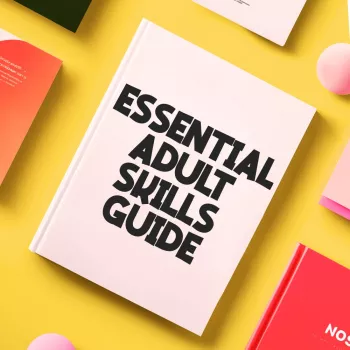
Essential Adult Skills Guide is a practical pick for building a steady system across budgeting, communication, media literacy, and life management.
For routines that involve pets (daily walks, commute kits, and weather readiness), these simple tools can reduce last-minute scrambling: Handmade Cotton Pet Leash and Collapsible Portable Pet Bowl.
FAQ
What are the most important adult skills to learn first?
Prioritize budgeting basics (bills, spending awareness, and a small buffer), clear communication (specific requests and boundaries), and a simple weekly planning routine. Add media literacy early to avoid costly mistakes from bad information.
How can a beginner start budgeting without feeling overwhelmed?
Start with due dates and essential bills, then track only the biggest categories for two weeks. Add one spending cap for discretionary purchases and automate a small savings transfer so progress happens without extra effort.
What is a quick way to check if an online claim is trustworthy?
Verify the source and author, then confirm the claim with two independent, reputable sources. Be cautious of sensational headlines, missing context, and posts that push you to react immediately.









Leave a comment