
Cozy Indoor Pet House Guide for Cats & Small Dogs
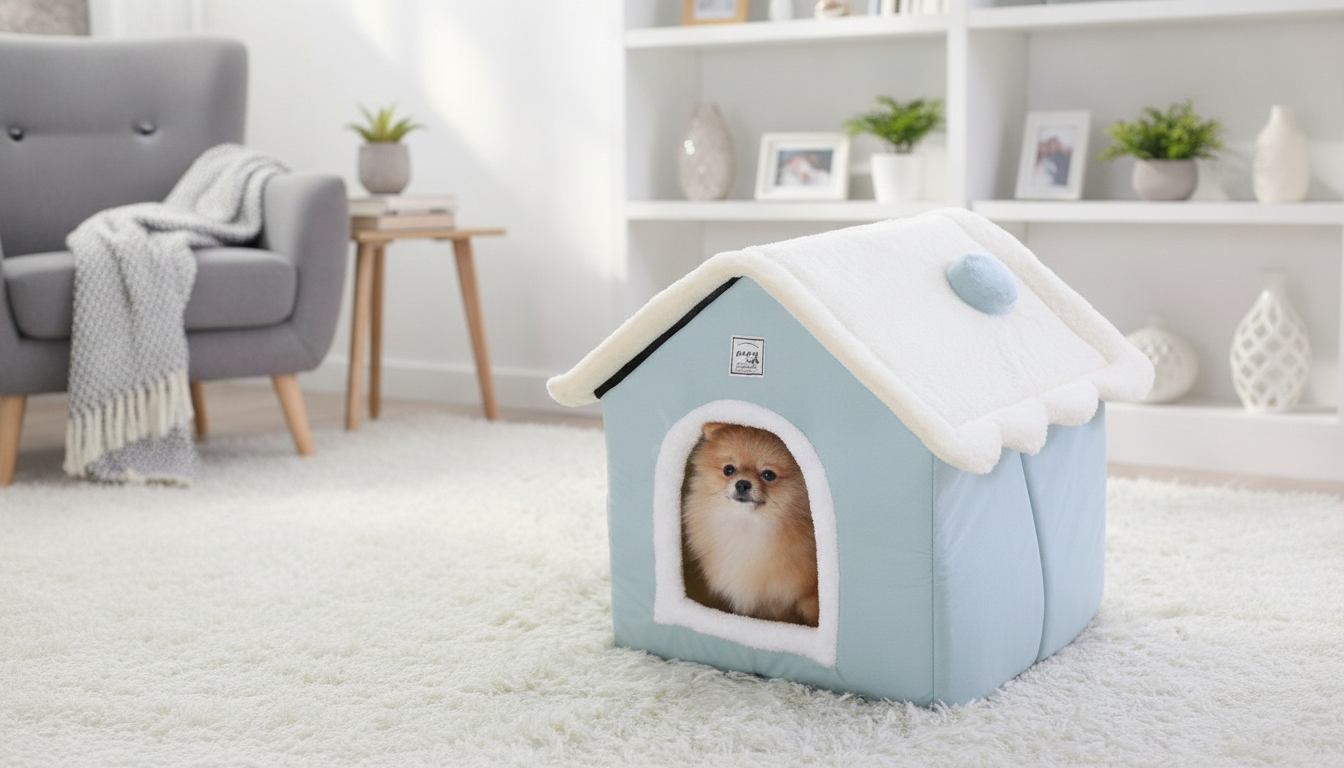
Cozy Indoor Pet House: A Warm Retreat for Cats and Small Dogs
A soft, enclosed indoor hideaway can help pets feel secure, sleep more soundly, and stay comfortable during cooler seasons or in drafty rooms. The right setup creates a predictable “safe spot” that supports calmer downtime, especially in busy homes or small apartments.
Why an Indoor Pet House Helps at Home
Many cats and small dogs naturally seek out dog crate natural sheltered spaces—think boxes, closets, or under-chair nooks—because they feel protected on multiple sides. A dedicated indoor pet house can meet that instinct in a cleaner, more consistent way.
- Creates a den-like space that can reduce startle responses from household noise and foot traffic
- Supports better rest by limiting light and visual stimulation, especially for cats that nap frequently
- Adds warmth by trapping body heat, which can be helpful for pets that seek blankets, closets, or under-furniture spots
- Gives multi-pet households an option for personal space, which can lower tension around shared beds
- Offers a defined “safe spot” during visitors, vacuuming, or other stressful routines
For fear and stress management basics, the American Veterinary Medical Association shares practical guidance on supporting pets during fearful events, and the ASPCA outlines common stress triggers for cats.
Cozy Indoor Pet House at a Glance
If your pet consistently chooses tucked-away corners, a dedicated indoor house can become the “default” rest zone—helpful for naps, hiding, calmer downtime, and draft protection near doors or windows.
- Best for: cats, kittens, and small dogs that like enclosed sleeping spaces
- Use cases: napping, hiding, calmer downtime, and draft protection near doors or windows
- What to prioritize: stable structure, soft interior, easy-to-clean surfaces, and an opening size that fits comfortably
- A good fit when: pets regularly choose boxes, laundry baskets, or tucked-away corners for sleep
Quick Checklist for a Good Fit
| What to check | Why it matters | What to look for |
|---|---|---|
| Interior comfort | Encourages consistent use | Soft lining, supportive base, no scratchy seams |
| Structure and stability | Prevents tipping and collapses | Firm walls/base; non-slip bottom if possible |
| Opening size | Easy entry without squeezing | Enough clearance for shoulders/hips; no head ducking |
| Cleaning approach | Keeps odors and allergens down | Wipeable surfaces or removable cushion/liner |
| Placement flexibility | Improves daily use | Lightweight enough to move; fits common room corners |
Choosing the Right Size and Style
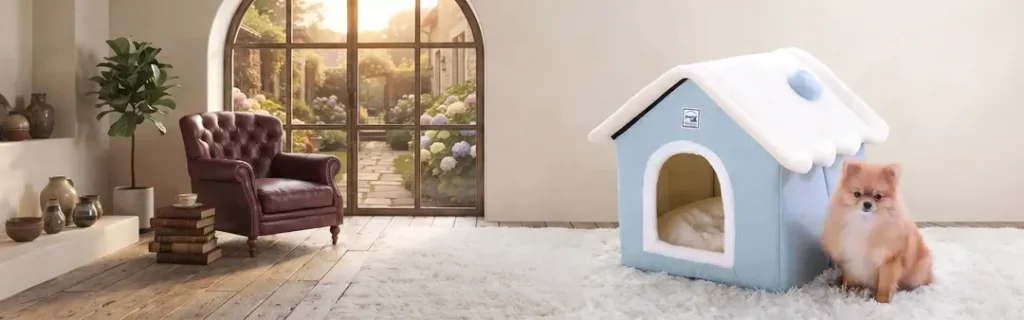
Comfort starts with sizing. Measure your pet’s resting length (nose to base of tail) and choose an interior that allows both curling and stretching. A too-tight interior can feel restrictive; too roomy can feel exposed for pets that prefer a snug “cave.”
- For pets that sprawl, consider a roomier interior; for pets that burrow, a snugger den can feel safer
- An enclosed design often suits shy pets, while more confident pets may use it as a nap cave between activities
- If the pet is senior or has joint stiffness, favor a lower entry and a stable base to reduce stepping effort
- If the home has slippery floors, place the house on a rug pad or low-pile rug for traction
If you’re ready to set up a dedicated hideaway, the Cozy Indoor Pet House is designed to create a sheltered indoor retreat that feels like a consistent, calm “home base.”
Where to Place It for Maximum Use
Placement determines whether the pet house becomes a daily favorite or a rarely used object. Most pets prefer a predictable, low-traffic zone with gentle airflow.
- Choose a calm zone: a corner of the living room, bedroom, or a quiet office spot often works well
- Avoid direct drafts from exterior doors, AC vents, or fans; warmth works best when airflow is gentle
- Keep it near (but not directly beside) food and water—many cats prefer separation between sleep and feeding areas
- In multi-pet homes, offer distance from busy pathways and consider multiple resting options to prevent guarding
- For anxious pets, placing the house near familiar scents (a blanket or shirt) can speed adoption
For cats, especially, environmental layout matters. International Cat Care offers helpful guidance on meeting indoor environmental needs in a way that supports comfort and choice.
Comfort Upgrades That Don’t Overheat
Cleaning and Care Routine
To reduce buildup between washes, a quick grooming pass can help. The Pet Hair Remover Comb is a simple add-on for routine coat maintenance, which can mean less shedding collects in enclosed corners and seams.
Getting a Pet to Use It (Without a Battle)
Pairing the Setup With Everyday Essentials
If your cat prefers running water, placing a fountain a short distance away (not right next to the entrance) can support good hydration habits while keeping the sleep zone quiet. The 1.5L Automatic Cat Water Fountain is an easy option for everyday refreshes.
FAQ
How do you clean an indoor pet house without stressing the pet?
Do quick spot-cleaning while your pet is in another room, then return the house to the same location so it still feels familiar. Rotate a washed liner with a second blanket that already smells like your pet, and use mild, fragrance-free cleaners to avoid creating an unfamiliar scent.
Is an enclosed pet house good for anxious cats or small dogs?
It can be, because den-like coverage often helps pets feel protected from noise and movement. Choose a design with easy entry/exit, place it in a quiet corner, and use positive associations like treats or a familiar blanket—while still letting your pet choose, since some prefer open beds.
Where should an indoor pet house be placed in a small apartment?
Use a corner away from the main walkway, and avoid direct airflow from vents or drafty doors. Under a desk, beside a nightstand, or in a bedroom corner often works well; keep some distance from litter and feeding areas when possible.








Leave a comment