
Stop Cat Mats: Easy Routine for Long-Haired Coats

Preventing Mats in Long-Haired Cats: A Calm, Consistent Grooming Routine
Matting can turn a beautiful long coat into an uncomfortable, skin-pulling problem that traps moisture, debris, and odors. A simple routine—done in short, low-stress sessions—keeps fur light, clean, and easy to manage while helping you spot coat and skin issues early.
What matting is and why it happens
Mats form when loose undercoat tangles around longer guard hairs, then tightens with movement and friction. Once a knot starts, everyday activities—jumping, stretching, rolling, and even normal self-grooming—can cinch it closer to the skin.
Common triggers include shedding season, humidity, static, a dirty coat, and skipping brushing during high-shed weeks. Friction zones mat fastest: behind the ears, under a collar or harness, in the armpits, along the belly and inner thighs, and at the base of the tail.
Some cats are also at higher risk because they groom less effectively. Arthritis, obesity, dental pain, stress, and senior age can all reduce self-grooming, allowing loose hair to accumulate and felt together.
The gentle tool kit that prevents most mats
You don’t need a drawer full of gadgets—just a few cat-safe basics used consistently.
- Wide-tooth comb: Best for finding tangles close to the skin; a comb is the “truth test” after brushing.
- Slicker brush: Lifts shed undercoat on the back and sides; use light pressure to avoid brush burn.
- Soft bristle brush: Finishes and distributes natural oils; helpful for sensitive cats.
- Cat-safe detangling spray: Reduces static and friction; avoid human products with strong fragrance.
- Blunt-tip grooming scissors: For trimming small, superficial tangles only; keep tips pointed away from skin.
- Skip razor dematting tools unless trained: Cat skin is thin and can be cut easily, especially in tight mats.
Simple mat-prevention schedule by coat type and lifestyle
| Cat profile | Minimum brushing plan | What to focus on | Red flags to watch |
|---|---|---|---|
| Long-haired indoor cat (average shed) | 5–10 minutes, 3–4x/week | Behind ears, ruff, armpits, belly line | Small knots that reappear within 24–48 hours |
| Long-haired cat during seasonal shed | 5–10 minutes, daily | Undercoat lift with slicker + comb check | Tufts shedding in clumps; dandruff; static |
| Senior/overweight/limited self-grooming | 5 minutes, daily (split into 2 sessions if needed) | Belly, hindquarters, base of tail | Greasy coat, urine staining, strong odor |
| Outdoor or high-activity cat | 10 minutes, 3–5x/week | Debris removal, burr checks, collar area | Burrs, sap, muddy patches, skin irritation |
A stress-light routine cats accept (even if they dislike grooming)
Many long-haired cats tolerate grooming better when it’s predictable, brief, and ends before they feel trapped. Choose a time when your cat is naturally calmer—often after a meal or a short play session.
Start with just 30–60 seconds on easy areas like shoulders and the back. Stop while your cat is still relaxed, then build duration gradually over days. This approach prevents the “big battle” that teaches cats to avoid brushes altogether.
- One hand to calm, one hand to groom: Keep steady contact on the chest or shoulder while brushing with the other hand.
- Reward immediately: Offer a small treat, a lickable snack, or a short play burst to end on a positive note.
- Keep it frequent and short: Consistency prevents deep knots that require painful work later.
If your cat tends to fidget, a quiet, cozy “grooming spot” can help—many cats settle faster on a familiar soft surface like a dedicated bed. The Cozy Pet Bed for Cats and Small Dogs can be a comfortable place to do quick comb-checks without chasing your cat from room to room.
How to brush for mat prevention (skin-safe technique)
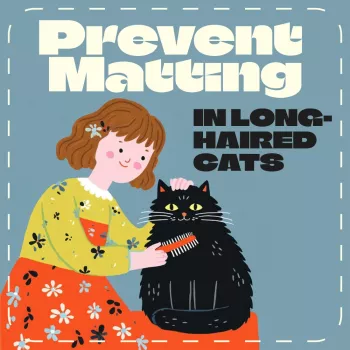
For a simple step-by-step routine you can print and stick near your grooming supplies, consider the How to Prevent Matting in Long-Haired Cats | Digital Download Guide & Grooming Checklist.
Tangles vs. mats: what can be handled at home
Bathing and drying without creating new mats
Coat health from the inside: factors that influence matting
Parasites and skin conditions increase scratching and overgrooming, which can worsen tangling and breakage. Pain or mobility issues also reduce self-grooming; regular vet checkups help catch arthritis or dental pain early. For additional grooming fundamentals, see the ASPCA’s cat grooming tips and International Cat Care guidance on grooming and coat care. If you suspect skin disease, Cornell’s overview of feline skin disorders is a helpful reference for what to watch for.
A printable checklist that keeps the routine consistent
When to involve a groomer or veterinarian
For severe mat removal, sedation may be recommended to prevent pain and injury—especially in anxious, sensitive, or medically fragile cats. While you rebuild a calm grooming routine, puzzle-style feeding can reduce stress and keep your cat busy before short brush sessions; the Cat Swing Feeder Toy can be a simple way to add enrichment to the day.
FAQ
How often should a long-haired cat be brushed to prevent mats?
Most long-haired cats do well with 5–10 minutes of brushing 3–4 times per week, plus quick daily checks in friction zones. During seasonal shedding, or for seniors and cats who self-groom less, daily short sessions help prevent knots from tightening near the skin.
Are mats painful for cats?
Yes—mats can pull the skin with every movement and trap heat and moisture, which raises the risk of irritation and sores. Cats may become touch-sensitive, avoid being handled, or act irritable because the coat feels tight and uncomfortable.
Is it safe to cut out a mat with scissors?
It’s not safe to cut tight mats with scissors because cat skin is thin and stretchy, and it can be nicked even when it looks like there’s space. For large, tight, or skin-close mats, a professional groomer or veterinarian is the safest option.









Leave a comment