
Pet-Proofing Checklist: Room-by-Room Home Safety Plan
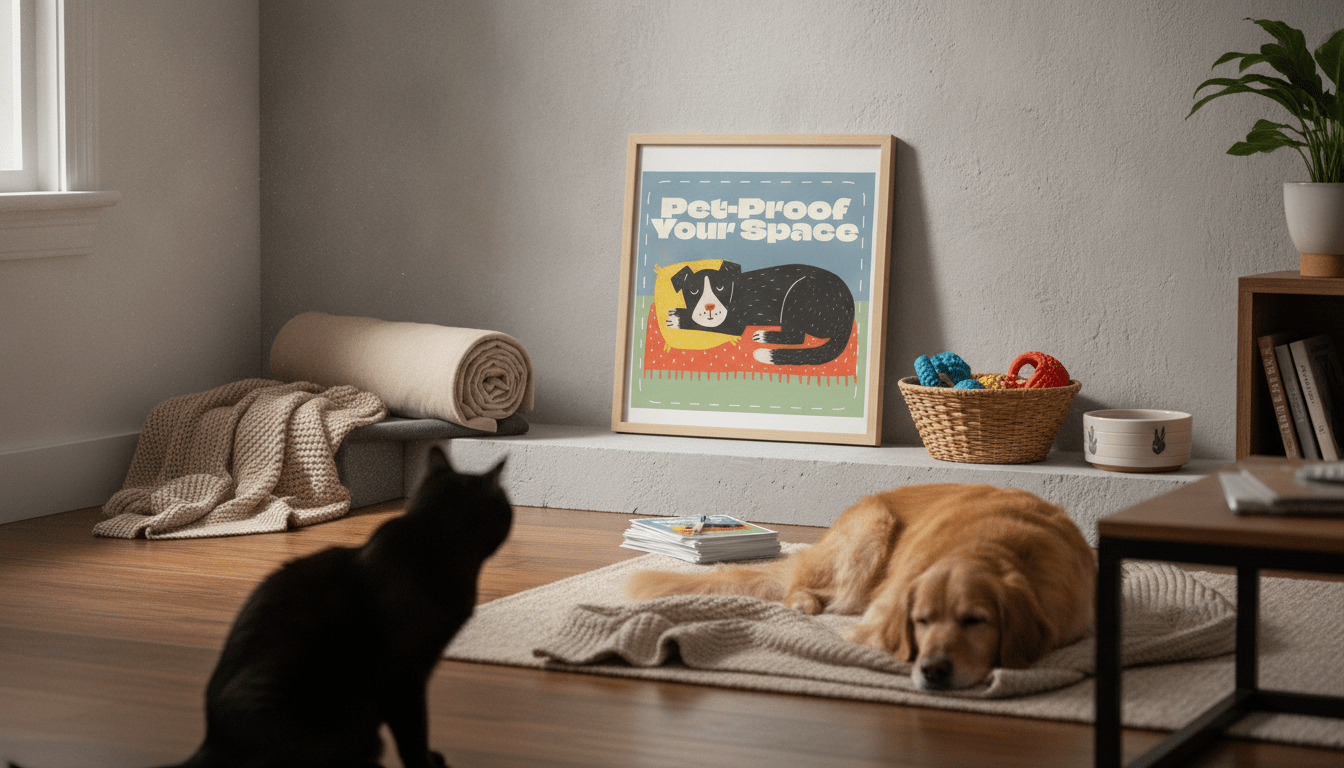
Before Starting: Set Up a Quick Safety Baseline
Pet-proofing goes faster when you start with a repeatable system: spot hazards, block access, remove temptations, and offer a safe “yes” alternative. Before you tackle each room, run a quick baseline pass.
Following our Pet-Proofing Checklist will ensure your home is safe for your furry friends.
- Do a pet’s-eye scan: kneel to floor level and look for cords, small objects, chewable edges, and gaps behind furniture.
- Pick pet-free zones: decide which rooms stay off-limits (nursery, guest room, workshop) and where you’ll rely on gates, closed doors, or a playpen.
- Create a secure “yes space”: set up a calm spot with a bed or crate, water, and safe toys away from heavy foot traffic.
- Collect quick fixes: outlet covers, cord organizers, cabinet latches, a locking-lid trash can, and a flashlight for under-furniture checks.
Entryway and Living Areas: Shoes, Bags, Cords, and Small Objects
Entryways and living rooms are where pets find the most “new” stuff—guest bags, dropped earbuds, batteries, and shoes. These rooms benefit from simple storage habits and cord control.
- Block access to shoe piles and coat pockets—gum, xylitol mints, medications, and wrappers are frequent risks.
- Use a closed bin for gloves, kids’ toys, batteries, and coins; store remotes and earbuds in a lidded basket.
- Route charging cables behind furniture or through cord covers; unplug and store when not in use.
- Stabilize tall furniture and TVs; remove “launch points” near shelves to reduce climbing accidents.
- Avoid low, open trash bins; use a heavy, lidded can or keep trash behind a closed door.
Common Pet‑Proofing Fixes by Home Area
| Area | What to block or secure | Quick fix |
|---|---|---|
| Entryway | Shoes, bags, medication, gum/mints | Closed cabinet or lidded basket on a high shelf |
| Living room | Cords, remotes, small toys, houseplants | Cord covers + lidded storage + plant stands/out-of-reach |
| Kitchen | Trash, cleaning pods, food scraps, hot surfaces | Locking trash can + child latches + stove knob covers |
| Bathroom | Toilet water, razors, pills, floss | Toilet lock + closed drawers + covered waste bin |
| Bedroom | Laundry, jewelry, chargers, cosmetics | Hamper with lid + bedside cord management |
| Laundry/utility | Detergent, dryer sheets, machines | High shelving + closed door + keep lids latched |
Check items against your Pet-Proofing Checklist to keep hazards out of reach.
Kitchen and Dining: The Highest-Reward, Highest-Risk Zone
If a pet can access the kitchen, assume they will eventually test every cabinet, trash can, and countertop edge. Prioritize barriers and locked storage here.
- Lock or latch lower cabinets that hold cleaners, detergents, trash bags, pest control, or sharp tools.
- Block access to trash, compost, and recycling; rinse containers that held fatty foods to reduce scavenging.
- Keep counters clear of foods that can be toxic to pets (grapes/raisins, chocolate, onions/garlic, and xylitol sweeteners). For xylitol specifics, see the FDA’s guidance on xylitol and dogs.
- Use stove knob covers (or remove knobs when feasible) if a pet can bump them; keep pan handles turned inward.
- Store breakables and skewers/toothpicks out of reach; wipe up grease and spills promptly to prevent licking.
If you do a lot of training walks or outdoor meals, keep a dedicated “grab-and-go” hydration setup near the door, like the Collapsible Portable Pet Bowl, so pets aren’t tempted to raid sinks, toilets, or puddles.
Bathroom: Small Items and Water Hazards
Bedrooms and Closets: Laundry, Cosmetics, and Tiny Temptations
Laundry Room, Garage, and Utility Areas: Chemicals and Machine Safety
Utilize this Pet-Proofing Checklist to identify risks in your kitchen and dining areas.
- Keep detergents, pods, dryer sheets, and stain removers on high shelving or behind a latched door.
- Adopt a “door habit”: check the washer/dryer before starting and keep doors closed so pets can’t climb in.
- In garages or workshops, block access to antifreeze, paint, fertilizers, rodenticides, and tools—many are toxic even in tiny amounts. For a broader overview, review the AVMA’s poison prevention tips.
- Store cords, string, and rope securely; ingestion can cause serious intestinal injury.
- If you can’t fully secure the space, make it a strict no-access zone with a closed door and a gate as backup.
Comprehensive Pet-Proofing Checklist for Every Room
Plants, Décor, and “Looks Safe” Hazards
- Identify houseplants and confirm they are safe for pets; move any unknown or risky plants out of reach. The ASPCA’s toxic and non-toxic plant database is a helpful reference.
- Replace breakable décor at floor level with sturdier items; secure heavy frames and mirrors.
- Avoid open-water features, candles, and reed diffusers where pets can tip over or ingest the contents.
- Watch for stringy décor (tinsel, ribbon, yarn) and remove or secure it—especially during holidays.
- Add rug grips to reduce slips during high-speed “zoomies,” especially on hardwood and tile.
Stairs, Balconies, and Outdoor Access Points
For safer outdoor routines, use reliable walking gear you can grab consistently—like the Handmade Cotton Pet Leash—so doorways and “quick trips” don’t turn into avoidable escapes.
Make It Repeatable: Use the Digital Checklist for Fast Re-Checks
Download: The Ultimate “Pet‑Proof Your Space” Checklist
The Pet-Proofing Checklist is essential for laundry rooms to avoid chemical exposure.
If you want a structured, room-by-room plan you can reuse after moves, renovations, holidays, or fostering, grab The Ultimate “Pet‑Proof Your Space” Checklist (digital download). It’s designed to help you identify what areas to block, what items to secure, and what habits to keep consistent—without relying on memory.
Refer to the Pet-Proofing Checklist for safety in garages and utility areas.
FAQ
What are the most important areas to block for pets right away?
Start with the kitchen (trash, food, cleaners), bathroom (medications, trash, toilet), and laundry/utility spaces (detergents and chemicals), then address any room with cords or small swallowable objects. Doors and gates handle access, while latches and cord management handle the details.
How do you pet-proof cords and chargers effectively?
Route cords behind furniture, use cord covers or sleeves, keep chargers off the floor, and unplug/store extras when not in use. If chewing continues, block the entire area and redirect with safer chew options.
Don’t forget to check plants against the Pet-Proofing Checklist for any hazards.
How often should pet-proofing be re-checked?
Do a quick weekly sweep and a full room-by-room review after changes like moving, holidays, guests, a new pet, or furniture rearranging. Re-check immediately after any chewing, climbing, or trash-raiding incident.









Leave a comment