
Backyard Dog Agility: 3-Piece Hurdle Training Set
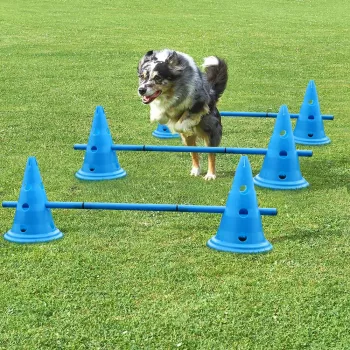
3-Piece Dog Hurdle Training Set for Backyard Agility and Confidence Building
A simple hurdle setup can turn everyday playtime into focused movement practice—helping dogs build coordination, confidence, and responsiveness. A 3-piece hurdle training set is ideal for short sessions in the yard, driveway, or open indoor space, with room to progress from walk-overs to light jumping while keeping safety and fun at the center. For more guidance, see Injury, Risk and Training Habits Among Dog Agility Handlers – PMC.
What a 3-piece hurdle set is best used for
Three hurdles are “just enough” equipment to create structure without overwhelming a beginner dog (or handler). You can train one obstacle at a time, then link them into short sequences that teach rhythm and direction. For further reading, see Dog Agility Equipment for Backyard Fun and Training.
- Foundation agility: teaches a dog to approach, stride, and clear a low obstacle with control.
- Body awareness: encourages proper paw placement, balance, and steady pacing.
- Handler communication: builds cues such as “over,” “wait,” “go,” and directional sends.
- Energy management: provides structured activity for high-drive dogs in short, repeatable bursts.
- Confidence building: low-height introductions help hesitant dogs learn obstacle skills without pressure.
If you’re curious about the broader sport and how obstacles are typically introduced, the American Kennel Club (AKC) overview on getting started in agility offers a helpful big-picture framework.
Safety and setup basics before the first rep
Hurdles should feel like a puzzle your dog can solve—not a dare. Set up for controlled movement first, then let speed show up naturally later.
- Choose a flat, non-slip surface; avoid slick tile or wet grass when beginning.
- Start low and reward calm approaches; reduce speed before increasing height or distance.
- Warm up with 2–3 minutes of easy walking, figure-eights, and sit/stand transitions.
- Keep sessions short: 5–10 minutes is often plenty for beginners to avoid sloppy form.
- Use a clear release cue so the dog doesn’t self-launch unexpectedly.
- Stop if any limping, hesitation, repeated refusals, or stress signals appear; consult a veterinarian if pain is suspected.
| Item | Why it matters | Simple fix |
|---|---|---|
| Surface traction | Prevents slips on takeoff/landing | Use grass, rubber matting, or a carpet runner indoors |
| Hurdle height | Too high increases joint load | Begin with step-overs; raise gradually only with confidence |
| Approach distance | Too short causes awkward jumping | Give a few strides before the hurdle |
| Repetition count | Fatigue reduces form | Use 3–6 good reps, then break |
| Dog readiness | Puppies/seniors may need limits | Keep low, slow, and vet-approved |
For general conditioning guidance and safe exercise pacing, VCA Animal Hospitals provides practical considerations on exercise for dogs, including the importance of matching intensity to fitness.
How to introduce the hurdles (confidence-first progression)
A simple progression helps dogs learn what’s being asked without guessing. Keep rewards frequent, and reset often so each rep looks smooth.
Sample 2-week beginner plan (5–10 minutes/day)
| Day range | Goal | Setup | Success marker |
|---|---|---|---|
| Days 1–3 | Calm step-overs | 1 hurdle, very low | No rushing; smooth walk/trot over |
| Days 4–6 | Consistent cue response | 1 hurdle + start-line pause | Moves on release; minimal refusals |
| Days 7–10 | Rhythm and forward focus | 2 hurdles straight line | Even strides; lands and continues forward |
| Days 11–14 | Short sequences | 3 hurdles, straight or gentle curve | Can repeat 3–5 clean reps with breaks |
Adjusting for puppies, seniors, and different body types
Common training mistakes and quick fixes
Product spotlight: 3-Piece Dog Hurdle Training Set
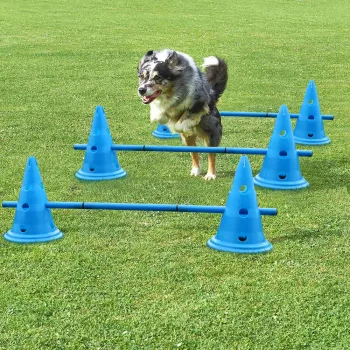
If you want a compact setup that supports progression without building a full backyard course, the 3-Piece Dog Hurdle Training Set makes it easy to practice single-hurdle skills, then combine obstacles into short sequences as timing improves. It’s especially useful for households that prefer repeatable routines—same three stations, same cues, better reps over time.
To keep sessions comfortable in real-world conditions, weather and recovery matter too. For cooler or damp days, the Waterproof Reflective Pet Hoodie can help dogs stay warm and visible, and for trips to training spaces or classes, the Cozy Travel Pet Carrier supports calmer transitions. If you’re pairing conditioning with healthy weight goals, the Healthy Paws, Happy Life | AI Pet Weight Tracking Guide for Smart Pet Owners can help you stay consistent with monitoring alongside activity.
| Item | What you get | Best for |
|---|---|---|
| 3-Piece Dog Hurdle Training Set | Three hurdles for sequencing and progression | Beginner agility basics, coordination, short daily sessions |
Making training sessions more engaging without adding impact
FAQ
What height should a dog start with on training hurdles?
Start with step-overs or a very low bar so your dog can cross calmly with stable footing. Increase height gradually only after your dog is consistently smooth and confident, with extra caution for puppies and seniors.
How far apart should three dog hurdles be spaced?
Spacing depends on your dog’s stride and size, so begin with a comfortable trot and adjust until your dog moves through without stutter steps or awkward leaps. The right distance is the one that creates an even rhythm and forward motion.
How often should hurdle training be done each week?
Short sessions 2–5 times per week work well for many dogs, depending on fitness and recovery. Keep reps low and high-quality, take rest days, and stop before fatigue causes sloppy form.









Leave a comment